
All hobbies › Sumo Watching
Sumo Watching 相撲観戦
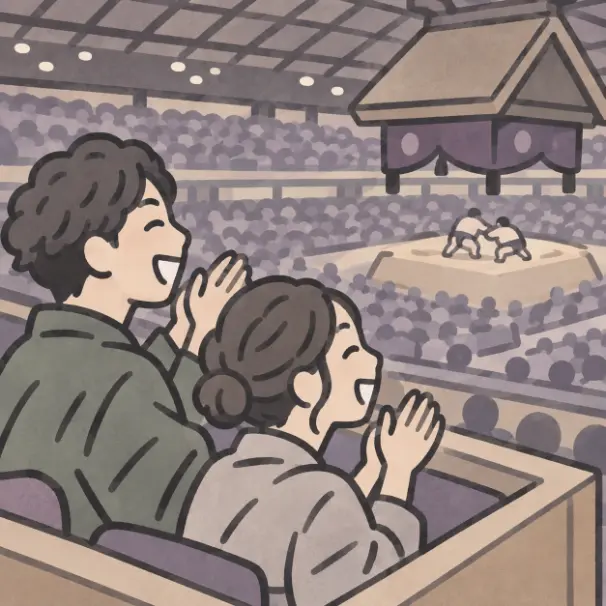
A hobby where you watch sumo wrestlers' bouts up close in the ring and feel the power of Japan's national sport.
- Cost
- From ¥3,000 per visit / up to ¥100,000 per year if you get serious
- Time
- A tournament day is 6 to 8 hours, a few times a year
- First step
- Watch one bout of sumo on TV
Why people love sumo watching
In the ring, the tension builds as wrestlers throw salt and wait until time is up for the start of the bout. Many bouts are decided in the instant of the first clash, and there are 82 winning techniques, such as pushing out, forcing out, and overarm throw. From the seats, the sound of bodies colliding echoes to the far edge of the audience. There are ranks from makushita up to yokozuna, so following wrestlers as they rise in the rankings is fun too. There are six main tournaments a year, and each one creates new stories. There is also a culture of spending the whole day relaxing while eating a boxed lunch. Sitting in the seats, the power of the clash right in front of you goes beyond what you get from a screen.
How to start
- Look up the schedule of the main sumo tournaments and how to watch
- Learn a few winning techniques, then pick the day and seat you will go
- Go to the arena (Kokugikan) and watch the bouts in the ring right in front of you
What you need
- Must have: A ticket, clothes that are easy to move in
- Nice to have: Binoculars, a banzuke (ranking sheet), a floor cushion
- Not needed at first: Expensive box seats, faraway regional tours
From beginner to advanced
- BeginnerUp to ¥5,000
Next challenge: You do not know the winning techniques or the rules
- IntermediateA few tens of thousands of yen per year
Next challenge: You cannot remember the rankings and wrestlers' names
- AdvancedFrom ¥100,000 per year
Next challenge: The stamina and cost to follow regional tournaments and tours
Tips
- Pick one favorite wrestler while watching the evening broadcast and you will look forward to his bouts. Wins and losses start to feel like your own. After a bout, say "that technique decided it" and you will remember it better.
- Buy tickets for the tournament early, and look at the bout schedule the day before to prepare. If you understand the flow, you enjoy it more. Looking up a wrestler's hometown gives you one more reason to cheer.
- Keep a banzuke at hand and follow who goes up and who goes down, and you will see how things change from tournament to tournament. Choosing a boxed lunch is part of the fun too, so it helps to check the food stands beforehand.
FAQ
Which seat is best for my first sumo visit?
Chair seats are affordable and let you see the whole ring. Masu-seki (box seats) are where a few people sit on floor cushions in a square, and they give you the atmosphere if you are two or more. For a first time, trying chair seats is easy.
What time should I go to watch sumo?
Tournament bouts start in the morning, and higher-ranked wrestlers come out later. Top-division bouts are in the evening, so if you go in after noon you can still see the ring-entering ceremony.
What should I wear to watch sumo?
There are no rules. Box seats are on the floor, so easy-to-move clothes and shoes that come off easily are comfortable. Since you stay a long time, bring something to put on over your clothes.
How old do you have to be to watch?
There is no age limit for watching sumo. It is a long day, so give small children extra breaks.
Are the rules hard?
You lose if you step out of the ring or if anything other than your feet touches the ground. If you remember just these two points, you can enjoy it.
When are the tournaments?
There are 6 a year. In Tokyo they are in January, May, and September. The others are held in Osaka, Nagoya, and Fukuoka. Check the official website for tickets.
Which seat is best?
For a first time, chair seats are easier. Box seats mean sitting on a cushion, so they suit people confident in their legs and back.
Can I bring my own food?
Bringing boxed lunches and drinks is allowed. But each venue has its own rules, so follow the guide.
Similar hobbies
Costs and steps are typical examples in Japan and can vary. 日本語のページ