
All hobbies › Shamisen
Shamisen 三味線
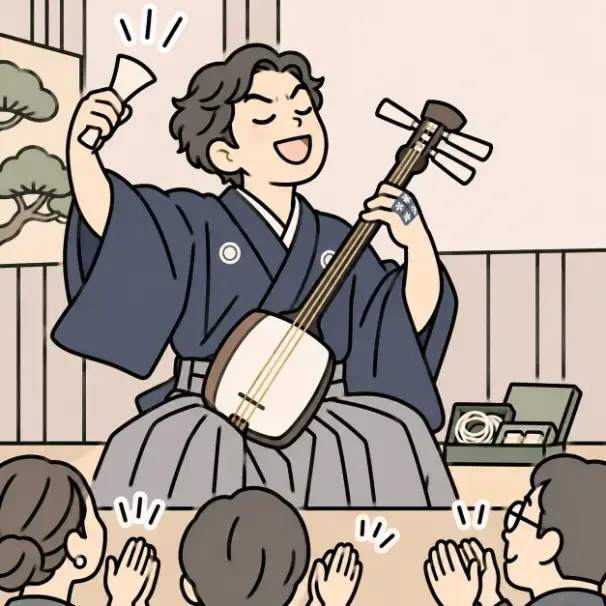
A hobby where you pluck three strings with a plectrum and play accompaniments for Japanese folk songs, nagauta, Tsugaru shamisen, and more.
- Cost
- From ¥30,000; up to ¥300,000 if you get serious
- Time
- 1–2 times a week, 1 hour or more
- First step
- Sound the third string at a class
Why people love shamisen
Strike the three strings with the plectrum, and the skin-covered body booms and the vibration reaches inside your body. Even on the same string, a hard strike and a light touch change the expression as if they were different instruments. The day you play a whole folk song, you feel that the sound people heard in the Edo period is in your hands. As you keep practicing, hand position and plectrum angle sink into your body. Playing together with your teacher at a recital shows the results of practice in the thickness of the sound. Once you can play at festivals and folk song gatherings, you feel yourself joining a flow of sound that has continued since long ago.
How to start
- Look up nearby shamisen classes and trial lessons (¥2,000–¥3,000 per lesson)
- Book a trial and check whether an instrument and plectrum (bachi) can be borrowed
- At the trial class, learn how to sit and sound the third string (the thinnest) with the plectrum
What you need
- Must have: A shamisen, a plectrum (bachi), a method book, a tuner for tuning
- Nice to have: Tuning pegs, a rubber plectrum guard, a practice mute
- Not needed at first: Expensive real-skin instruments, buying everything at the start
From beginner to advanced
- Beginner¥30,000–¥100,000
Next challenge: How to hold the plectrum and press the strings is not steady
- Intermediate¥100,000–¥300,000
Next challenge: Plectrum work in fast pieces and endurance of the right hand
- AdvancedFrom ¥300,000
Next challenge: Accompaniment and trying your own singing and improvisation
Tips
- Learn how to hold it and your posture in class first. Practicing with the right posture reduces fatigue in shoulders and arms and makes it easier to keep going. Learning in class lets you correct odd habits before they form.
- Always tune before you start playing each time. The habit of playing correct notes trains your ear and builds the foundation for improving. Checking pitch every time trains your ear.
- Practice relaxing the hand that holds the plectrum. Reducing tension makes the sound ring cleanly and keeps you from tiring even in fast pieces. With less tension, fast pieces become easier to play.
FAQ
How old do you have to be?
Kids can learn from elementary school age. Choose a shamisen sized to fit your body, and it is safest to learn the correct way to hold it from a teacher in class.
Can I do it alone?
Learning the basics in class is the shortcut. Once you are used to it, practice alone at home and play with friends at recitals and sessions.
How much does it cost?
Practice shamisen start from about ¥30,000. Class monthly fees run from a few thousand yen to over ¥10,000, and you also need plectrums and supplies.
Is the sound so loud it bothers neighbors?
The natural sound is loud, so a muting bridge or practice equipment gives peace of mind. In apartment buildings, also consider the time of day.
Which is better, real skin or synthetic skin?
Real skin has a richer sound, but it is weak to humidity and care is important. Synthetic-skin starter models are easier to handle at first.
Similar hobbies
Costs and steps are typical examples in Japan and can vary. 日本語のページ